Heating and hot water account for the largest part of an energy bill for a home in France. Optimizing energy consumption does not only involve heavy renovation work. Several levers, sometimes underestimated, allow for reducing this bill without disrupting daily life.
Energy performance diagnosis: the often-overlooked starting point
Before replacing a radiator or installing insulation, the DPE (energy performance diagnosis) provides an accurate snapshot of the home’s losses. This document identifies the areas of heat loss, whether they are walls, the roof, windows, or the heating system.
Many homeowners incur expenses on a secondary area while the main cause of overconsumption lies elsewhere. The DPE guides priorities: insulation first, equipment change second. Without this diagnosis, choices are made blindly.
Those wishing to optimize energy with maisonfjord.fr on Parlons Déco will find a useful framework for understanding how to prioritize interventions on an existing home.
Field feedback varies on this point: some craftsmen recommend starting with heating, while others suggest focusing on the building envelope. The DPE clarifies this issue by providing data specific to each home.
Insulation and airtightness: what really impacts the heating bill
Insulation remains the lever that produces the most sustainable savings. A poorly insulated home forces the heating system to constantly compensate for heat losses through walls, the roof, and windows.
The roof accounts for the largest share of thermal losses in a single-family home. Insulating the attic, whether it is lost or converted, significantly reduces heating consumption from the first winter.
Air infiltration is another often-overlooked area of loss. Uncontrolled air entries (around windows, under doors, at electrical outlets on exterior walls) do not contribute to the controlled ventilation of the home. Blocking them with seals or draft stoppers costs almost nothing.
Mechanical ventilation and air renewal: a balance to find
Insulating without proper ventilation creates a humidity problem. Mechanical ventilation (VMC) ensures the necessary air renewal while limiting heat loss. A double-flow VMC recovers heat from the outgoing air to preheat the incoming air, which reduces the demand on the heating system.
However, a well-adjusted single-flow VMC is sufficient in many homes. The extra cost of a double-flow system is only justified if the overall insulation is already effective.
Heating and hot water adjustment: actions that change the bill
Heating does not require the same temperature in all rooms or at all times. Living areas (living room, kitchen) work well at 19 °C. Bedrooms and bathrooms that are unoccupied during the day can drop to 17 °C without loss of comfort.
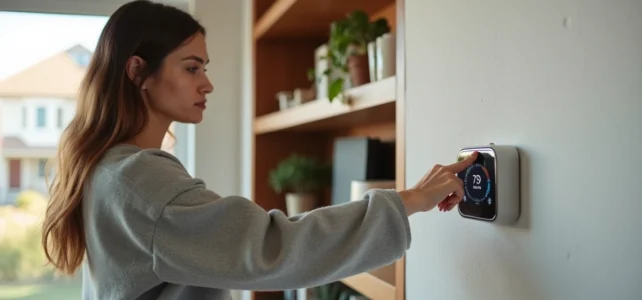
Lowering the heating when absent, even for a short time, has a measurable effect on consumption. A programmable thermostat automatically adjusts the temperature according to time slots, preventing heating an empty home during the workday.
- Setting the hot water tank between 55 and 60 °C limits electricity or gas consumption while preventing bacterial growth.
- Insulating hot water pipes and the tank reduces heat loss between production and draw-off points, especially when these elements pass through unheated spaces.
- Maintaining the boiler or heat pump at least once a year keeps the device’s efficiency and prevents gradual overconsumption.

Domestic hot water represents an often-underestimated expense. Installing aerators on faucets and favoring short showers reduces the amount of water to heat, thus the associated energy consumption.
Electricity outside heating: the accumulating consumption areas
Beyond heating and hot water, everyday electrical appliances weigh on the bill. The refrigerator, freezer, and dryer operate continuously or very frequently. Their energy efficiency varies greatly depending on the age and class of the appliance.
Standby devices consume electricity continuously. Power strips with switches, timers, or systematically unplugging unused equipment eliminate this phantom consumption.
Lighting has seen its share decrease with the widespread use of LED bulbs. However, the proliferation of screens, chargers, and connected devices creates new consumption areas. A quick inventory of devices that are always plugged in helps identify unnecessary consumption.
Real-time consumption monitoring
Smart meters allow tracking of electricity consumption by time slot. Cross-referencing this data with household habits sometimes reveals overconsumptions linked to a faulty device or usage misaligned with off-peak hours.
Adapting the operation of the washing machine or water heater to off-peak hours reduces costs without changing the amount of energy consumed, which remains a direct gain on the bill.
Energy renovation aids: a framework that is regularly evolving
Several public schemes fund part of the insulation, heating replacement, or ventilation installation work. MaPrimeRénov’ and energy savings certificates (CEE) cover a variable fraction of the cost depending on household income and the nature of the work.
Eligibility conditions and amounts change frequently. Consulting a France Rénov’ advisor before engaging a quote avoids unpleasant surprises. Some work must be carried out by a certified RGE craftsman to qualify for aid.
Optimizing the energy consumption of a home relies on a combination of simple actions and targeted work. The DPE sets the course, insulation addresses the root causes, and daily adjustments limit waste. Each home has its own weaknesses, so the effective sequence of actions varies from case to case.