
The NC designation prohibits any commercial exploitation, even indirectly, while the ND option blocks the creation of modified versions. Some sites refuse to host works under this license, citing restrictions that are incompatible with their distribution policies. Despite a growing popularity in the educational world, this legal framework regularly raises questions about the reuse and sharing of protected content. Millions of resources are currently circulating under this regime, but each condition restricts users’ flexibility. Any inappropriate use exposes one to litigation, even in seemingly non-commercial or purely educational contexts.
Creative Commons: Understanding the Major Families of Licenses
Creative Commons licenses provide a legal framework that allows each creator to precisely define the rights they grant to the public. For over twenty years, they have offered an agile alternative to the traditional copyright framework. Attribution (BY), non-commercial use (NC), no derivatives (ND), share alike (SA): each condition combines rigor and flexibility according to the author’s choice.
Adopted internationally, version 4.0 clarifies the language, strengthens the scope of contracts, and simplifies rights management for everyone, including creators and users. No one needs to be a lawyer to understand the extent of each option, and educational or scientific content benefits from a harmonized framework beyond borders.
| Abbreviation | Meaning | Effect on the Work |
|---|---|---|
| BY | Attribution | The author must be credited |
| NC | Non Commercial | Prohibition of commercial use |
| ND | No Derivatives | No adaptations allowed |
| SA | Share Alike | Adaptation under the same license |
When choosing a license, the commitment is never neutral: it draws the line between openness and control. For those who wish to learn everything about the CC BY NC ND 4.0 license, it is imperative to scrutinize every permitted use, as well as the friction areas and repercussions for both audiences and institutions. Comparing license families carefully allows for adjustments in choices, adapting to the project’s objectives and sector expectations.
CC BY NC ND 4.0 License: What Uses Are Allowed and What Are the Limits?
With the CC BY NC ND 4.0 license, three rules dominate. First, respect attribution: credit the author, indicate the title, source, and license without fail or ambiguity. Acknowledgment of origin is mandatory, no matter what.
Next comes the NC (Non Commercial) clause. Using the work to generate revenue, even indirectly, is formally prohibited. No financial benefit should flow through this creation. Associations, public institutions, or educational projects, as long as they do not pursue any profit-making goal, can exploit the content; however, commercial use triggers an immediate risk of litigation for rights violation.
Finally, the ND (No Derivatives) lock. It is impossible to modify, transform, or adapt the work, even for educational or non-commercial use. Any reuse must occur unchanged, without cuts or additions, without translation or partial integration into another set.
Here are the commonly accepted practices and the restrictions that apply:
- Permitted Uses: strictly unchanged sharing of content, free consultation on the internet, controlled access in educational processes, archiving in institutional collections, or distribution at non-profit events.
- Imposed Limits: prohibition of any transformation or modification, partial export, commercialization in any form, or incorporation into a new composite work.
Version 4.0 of the Creative Commons license brings welcome precision regarding the international scope and the maintenance of authors’ moral rights. Before using or publishing a protected resource, a careful reading of the contract is essential. The details make the difference.
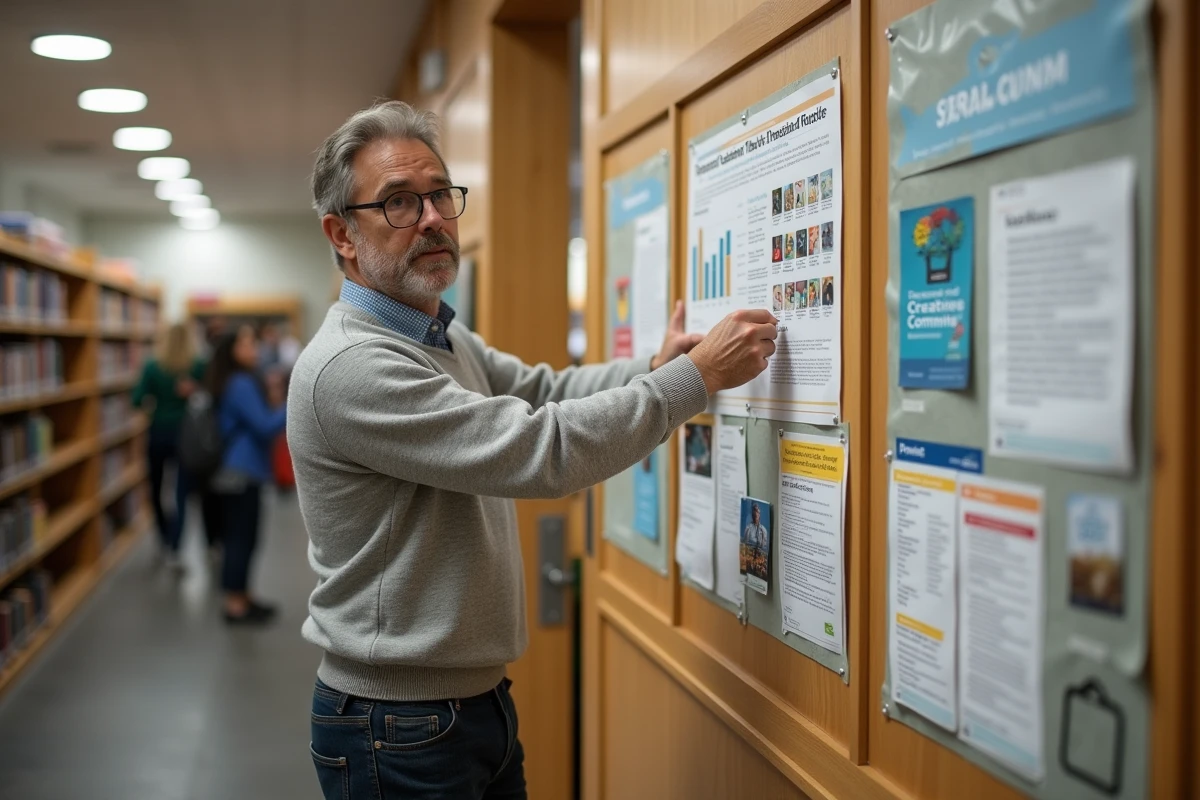
Choosing and Applying the Right License to Enhance Your Educational Resources
Before publishing an educational resource, ask yourself the right question: do we want to offer this content to everyone without the possibility of transformation or commercial profit? An appropriate license protects both the authorship of the document and the fluidity of its circulation. For broad yet strictly regulated distribution, the CC BY NC ND 4.0 naturally stands out.
Questions to Consider Before Distribution
Here are some essential points to check before any sharing:
- Does the content include third-party elements subject to other rights or licenses?
- Do all collaborators (main author, illustrators, partner institutions) confirm their agreement on the choice of license?
- What forms of reuse do you plan to allow: read-only, download, use in class, or in shared resources?
The license must be visible and unambiguous: mentioned on the document, in its descriptive sheet, or on the access platform. Always explicitly refer to the Creative Commons attribution, along with the official link. This clarity, far from being trivial, provides a solid reference for those who wish to use the work and ensures respect for the established framework.
Ensuring the visibility and future of your resources also involves a smart openness strategy. Favor accessible formats, detail metadata and usage conditions, and encourage proper citation. Publishing under Creative Commons does not mean losing control, but rather establishing stable rules so that permission and fidelity in use remain the foundation of healthy sharing. When protection meets pedagogy, the virtuous circle of knowledge circulation finds its balance.