
A new sofa, a trendy color on the walls, a few matching cushions: the recipe seems simple. Yet, many carefully decorated interiors end up looking like a catalog page, pleasant but soulless. The difference between a decorated space and one that reflects you often lies in less visible choices, related to your personal objects, how you occupy each room, and a few concrete principles of composition.
Biographical personalization: the decor lever that catalogs ignore
Have you ever noticed that an object brought back from a trip or a framed family photo attracts more attention than a mass-produced accessory? This phenomenon has a name in environmental psychology: biographical personalization. It involves integrating into your home objects linked to your memories, travels, or cultural identities.
A study published in September 2023 (“Personal objects and home attachment”) shows that this approach increases the sense of well-being and ownership of the home compared to purely trendy decor, even with a limited budget.
In practical terms, this can take very simple forms. A ceramic tray brought back from Portugal placed on a shelf. An old postcard slipped into a simple frame. A family fabric turned into a cushion. Each biographical object anchors the room in your story, and that’s what makes an interior impossible to replicate exactly.
To find ideas that break the mold in terms of home and decor, you can discover the Eklectik website, which explores various approaches to interior design.
Modular furniture and second-hand: a unique interior without replacing everything
Buying new every time you want a change is expensive and results in a static interior. Two recent trends offer a much more interesting alternative for creating a personal space.
Second-hand in stores, not just at flea markets
Since 2024, several major French retailers (IKEA France, Maisons du Monde, Castorama) have strengthened their services for the collection, resale, or repair of furniture and decor items. The 2024 CSR report from IKEA France details this strategy under the chapter “Circularity,” and Maisons du Monde launched a dedicated second-hand service in March 2024.
This circuit allows access to limited series pieces, refurbished items, or past collections. A second-hand piece from a retailer is often more unique than a new piece from the current range, because it is no longer available on the shelf.
Furniture designed to evolve with you
The European Regulation (EU) 2023/1670 on product sustainability, gradually applicable since 2024, pushes furniture manufacturers towards greater modularity. Interchangeable fronts, replaceable legs, removable covers: these technical features transform the way we decorate.
Instead of replacing an entire dresser, you change its handles and front. Instead of buying a new sofa, you order a cover in a different fabric. The interior evolves without generating waste or exploding the budget.
Creating a coherent space: light, color, and materials in the right balance
Personalization and modularity are not enough if the overall composition lacks visual logic. Three concrete parameters structure the coherence of a room without freezing it.
Light: multiply sources rather than watts
A single ceiling light casts flat light that flattens volumes. By adding a table lamp next to an armchair and indirect lighting behind a piece of furniture, you create areas of shadow and light that add depth. Three light points at different intensities in a living room radically change the ambiance without touching the walls.
Color: the principle of a common thread
You don’t need to repaint all your rooms. A common thread in color is a shade (or a family of shades) that appears in touches in each space. Here’s how to apply it simply:
- Choose an accent color present in an object you already love (a vase, a book, a textile)
- Incorporate this shade into two or three accessories per room (cushions, frames, candles)
- Keep large surfaces (walls, floor, main furniture) in neutral or closely related tones to avoid overwhelming the eye
This common thread creates a visual coherence between rooms without standardizing the decor.
Materials: the rule of three textures
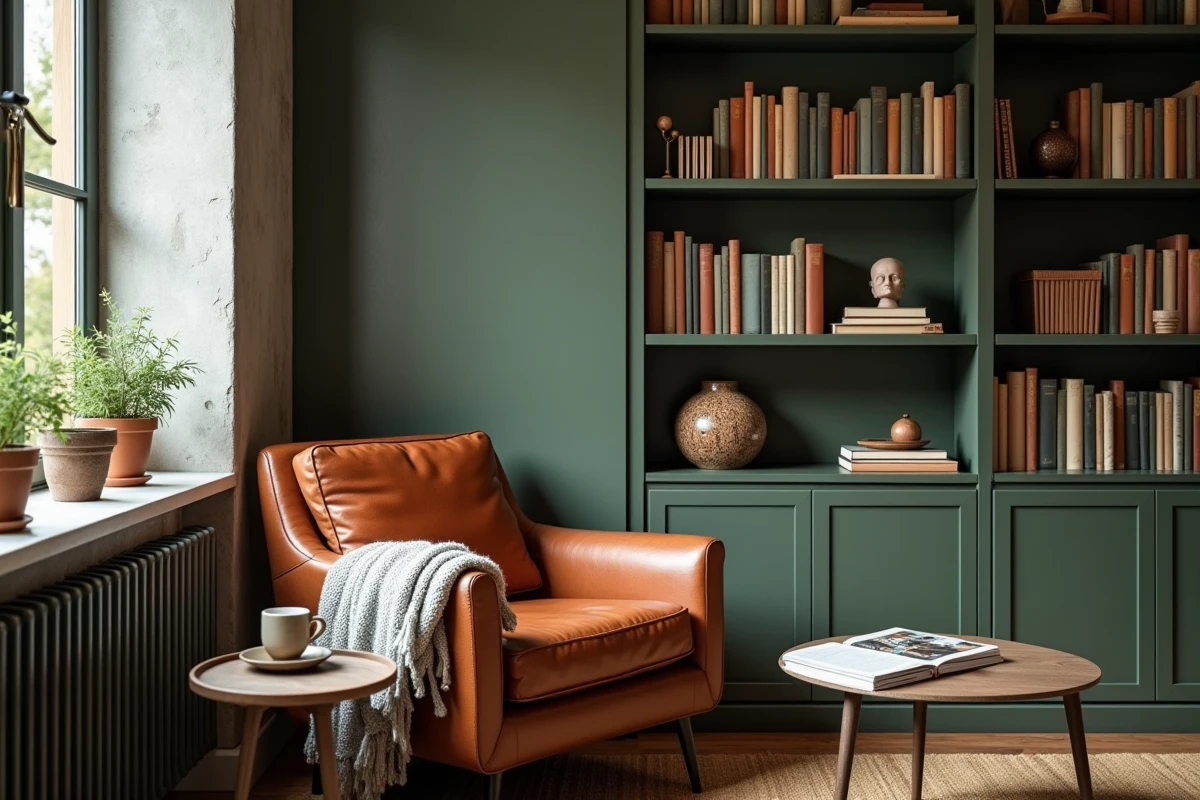
An interior made of a single material (all wood or all smooth fabric) appears monotonous. Combining at least three different textures in the same space brings a sensory richness that is noticeable at first glance.
- A raw material: unvarnished wood, stone, polished concrete, crumpled linen
- A smooth or shiny material: glass, metal, glazed ceramic, leather
- A soft and warm material: wool, velvet, woven rattan, thick cotton
Three contrasting textures are enough for a room to appear composed rather than simply furnished.
Home decor and real constraints: adapting inspiration to your daily life
Photos of interiors on social media show spaces without toys on the floor, without piles of mail, without visible cables. Adapting decor inspiration to a lived-in home requires accepting a few realistic compromises.
Visible storage (baskets, open boxes, accessible shelves) works better in an active household than hidden storage, which requires constant discipline. A natural fiber basket placed near the entrance absorbs keys, gloves, and chargers while remaining a decorative element.
Favoring materials that are stain and shock resistant in high-traffic areas (entryway, kitchen, hallway) avoids sacrificing aesthetics for fear of wear. Textured tiles, high-resistance laminate countertops, or removable fabric sofa covers protect everyday decor without compromising it.
Decorating a lasting interior that reflects you relies less on budget than on method: personal objects, adaptable furniture, and a controlled composition of light, colors, and textures. The greatest compliment a visitor can give your decor is not recognizing where the inspiration comes from.