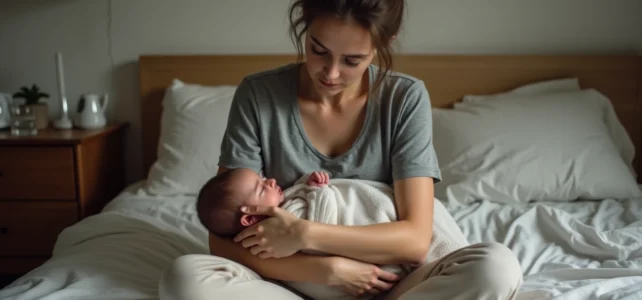
A baby peacefully sleeping in his mother’s arms, a radiant couple leaving the maternity ward: the images associated with parenthood always tell the same story. Maternity and everyday parenting rarely resemble these clichés. Between the mental load that begins long before birth and the emotions that no one dares to express, several realities deserve to be addressed directly.
Reproductive mental load: the invisible work even before pregnancy
Have you ever noticed that contraception, gynecological appointments, and professional organization for a potential pregnancy almost always fall on the same person? This phenomenon has a name: reproductive mental load. It refers to everything a woman manages mentally even before becoming pregnant.
A survey by INED published at the end of 2023 on reproductive trajectories shows that women report thinking almost daily about the issue of procreation, whether to avoid it or to plan it. For men, this concern remains significantly more sporadic.
Specifically, this includes medical follow-ups (Pap smears, hormonal assessments, folic acid), but also professional decisions: should one wait until the end of a fixed-term contract, negotiate a position before getting pregnant, anticipate maternity leave in a less accommodating sector? This work remains largely invisible because it takes place in the mind, without any material trace. Testimonials gathered on onnemavaitpasditque.com show how exhausting this silent phase is even before the first positive test.

Parental regret: a voice that is being freed in France
In recent years, testimonies from parents expressing regret about having children have multiplied. This phenomenon, long confined to English-speaking forums like r/regretfulparents (created in 2011 but seeing a significant increase in traffic since the pandemic), is now reaching the Francophone space.
Parental regret does not mean not loving one’s children. It describes a more diffuse feeling: the awareness that, if given the chance to do it again, one might not make that choice.
In France, psychologist and author Orélie Antoine de Gabrielli reports receiving many more patients who dare to explicitly express this regret, a phenomenon that was extremely rare just ten years ago. Her appearance on France Inter in March 2024 on the show “Grand bien vous fasse” triggered an influx of reactions.
The taboo remains powerful. Saying “I regret being a mother” exposes one to immediate social judgment. The pressure comes from everywhere: family, colleagues, social networks. Naming this feeling allows it to be distinguished from abuse or lack of love, two radically different things.
What parental regret reveals about idealized parenthood
The problem does not come from parents who regret. It comes from a collective narrative that presents parenthood as a guaranteed achievement. When reality does not match the script (sleepless nights lasting for months, loss of identity, weakened couple), the gap between expectations and experience creates suffering.
This suffering also affects fathers. Male content creators discussing the topic on TikTok and Instagram are finding an increasing resonance. Fatherhood has its own blind spots: the injunction to “be strong,” exclusion from parental discussion circles, and paternity leave that is still too short to create an equivalent attachment bond.
Postpartum mental health: beyond the baby blues
Most mothers experience a bout of baby blues in the days following childbirth. This phase, linked to hormonal drops, usually resolves within a few days. Postpartum depression, however, lasts longer and affects a significant proportion of mothers.
Postpartum depression can appear several months after birth, not just in the first few weeks. This time lag complicates diagnosis: when symptoms occur in the fourth or fifth month, neither the mother nor those around her make the connection with childbirth.
The signs to watch for go beyond simple fatigue:
- A persistent sadness that does not lessen with rest or support from those around, sometimes accompanied by a feeling of emptiness in relation to one’s own child
- Recurring intrusive thoughts (fear of harming the baby, catastrophic scenarios), often silenced by shame even though they concern many mothers
- A gradual withdrawal from activities and social relationships, mistakenly perceived as normal fatigue by the partner or family
Paternal postpartum also exists
Fathers can develop depressive symptoms in the year following the birth. Paternal postpartum remains underdiagnosed because healthcare professionals rarely direct screening towards the second parent. Men consult less, express their distress differently (irritability, professional burnout, withdrawal), and have fewer dedicated resources.
Couple and parenting: the topic parents avoid
The birth of a child often brutally redistributes roles within the couple. The division of domestic tasks, already unbalanced before the arrival of the baby, widens. Intimate life takes a back seat, sometimes for months, without anyone daring to bring it up.
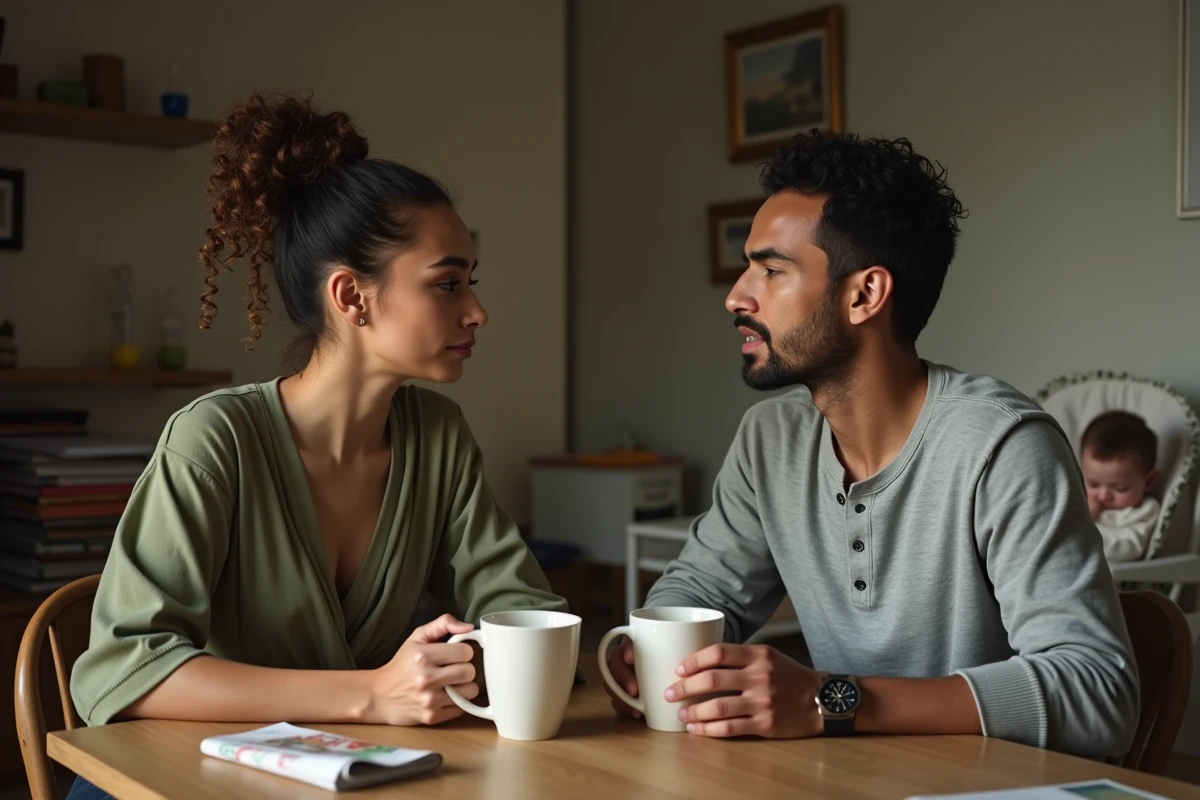
What weakens the couple is not the lack of sleep itself. It is the absence of communication about what each is going through. When one parent bears the majority of the nighttime load, medical organization, and daily logistics, resentment silently settles in.
Talking about one’s couple during the postpartum period remains frowned upon. As if becoming a parent should erase any marital concerns. Perinatal professionals are beginning to integrate couple interviews into postpartum follow-ups, but this practice remains marginal.
Parenthood transforms an entire life, not just the first few months. Adjustments take years, not weeks. Accepting that difficulty is part of the process does not diminish the love for one’s children. It simply allows one to experience this journey with less guilt and more clarity.