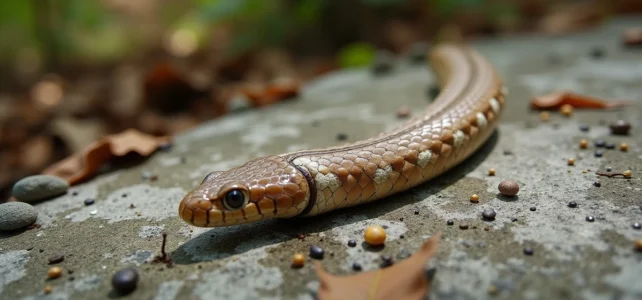
Snakes have a simplified digestive system that expels solid and urinary waste through a single opening, the cloaca. This anatomical feature produces recognizable droppings, but they are often confused with those of small mammals. Knowing how to identify snake droppings allows you to confirm the presence of these reptiles in a garden or building without needing to observe them directly.
Anatomy of the Cloaca and Formation of Snake Droppings
Unlike mammals, which have separate pathways for urine and feces, snakes expel everything through the cloaca. This unique passage mixes three components in each dropping.
- The fecal part, dark brown to black, made up of the remains of digested prey (fur, scales, bone fragments, insect chitin).
- The urates, a white or yellowish, pasty to chalky mass, which corresponds to the reptilian equivalent of concentrated urine in the form of solid uric acid.
- A small amount of clear liquid, sometimes absent, that accompanies the expulsion and briefly moistens the deposit.
This two-part structure (dark + white) is the most reliable signature. To delve deeper into the characteristics and photos of snake droppings, a detailed visual guide helps confirm this dual aspect in the field.
Appearance, Color, and Size: Concrete Identification Criteria
Fresh snake droppings appear as an elongated, irregular mass, often slightly moist. The fecal part is dark brown to black, sometimes greenish depending on the diet. The white part (urates) is attached at one end or mixed with the rest.
Size varies directly with that of the snake. A collar snake about forty centimeters long produces droppings the size of a pinky finger. Larger snakes or boas in captivity leave larger, segmented droppings that can be the size of those of a mustelid like a marten.
What Prey Remains Contain
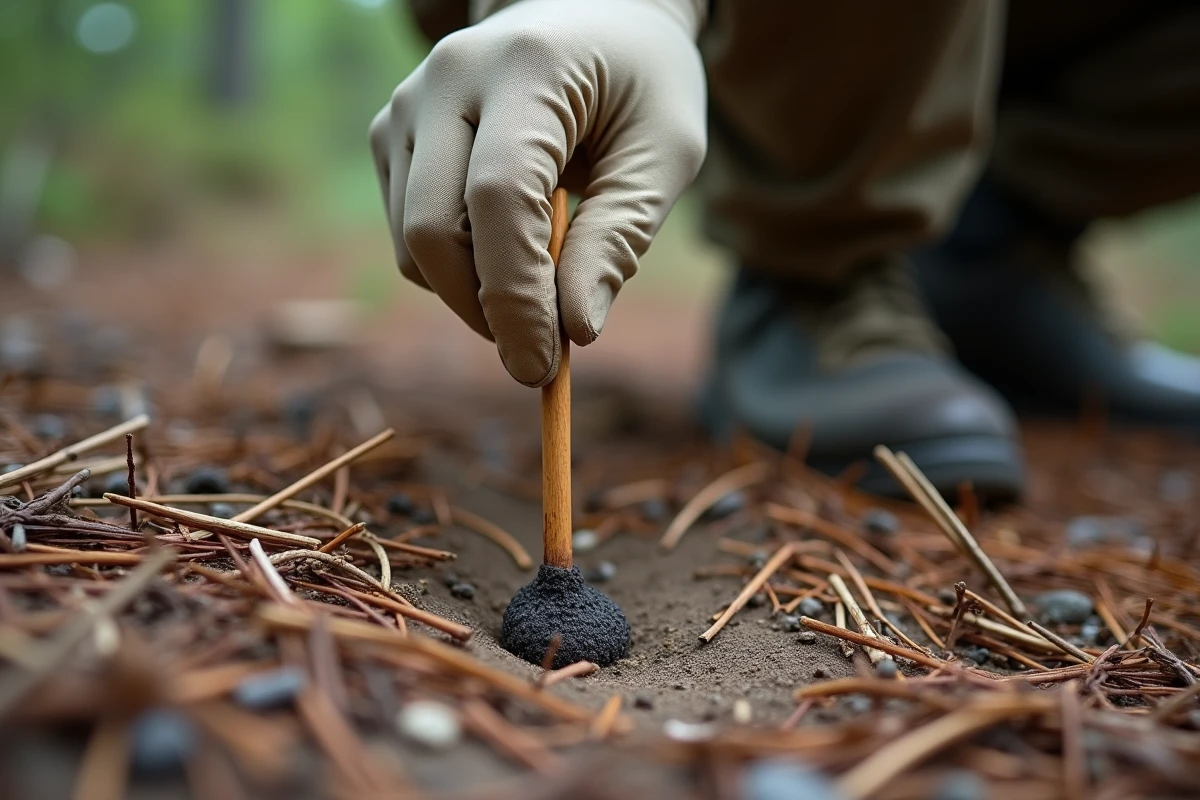
Upon closer examination of a dropping (with gloves), undigested elements can sometimes be spotted. Rodent fur, lizard scales, or insect chitin debris provide direct clues about the snake’s diet. Only the combined presence of urates and prey remains confirms the reptilian origin, as the feces of nocturnal raptors also contain bones and fur, but without urates.
Differences Between Snake Droppings and Rodent or Mustelid Excrement
The most common confusion involves rat and mouse droppings. These are uniformly dark, elongated rice grain-shaped, without a white component. Snake droppings, on the other hand, almost always exhibit this characteristic white part of urates.
The other pitfall concerns mustelids (marten, weasel). Their feces can be segmented and comparable in size to those of a large snake. The difference lies in the internal structure. Mustelid droppings contain fruit pits, feathers, and emit a strong musky odor. Snake droppings have little smell when fresh and never contain plant material.
Beware of Desiccation in Hot Climates
Field observations reported by herpetologists since 2022 highlight that in hot and dry climates, the white component disappears very quickly due to desiccation. The dropping then loses its most distinctive clue and resembles that of a small carnivore. In this case, examining the substrate around the deposit (sunlit areas, presence of hiding spots under stones or boards) helps to recontextualize the finding.
Snake Droppings in a Garden: Indicator of Biodiversity, Not Infestation
Regularly finding snake droppings near a compost pile, wood stack, or dry stone wall primarily indicates an abundance of prey. Recommendations from naturalist associations and departmental firefighter networks remind us that the presence of snake droppings is a positive sign of biodiversity, linked to the availability of rodents and amphibians, and does not constitute a reason for eradication.
In captivity as well as in the wild, snake droppings can carry parasites (ascarids, coccidia). Wearing gloves and washing hands after any handling of the substrate remains the rule, even when the dropping appears dry.
When to Worry About the Presence of a Snake
Finding a solitary dropping in a garden does not indicate a permanent establishment. However, repeated droppings in the same spot, combined with sheds and tracks on loose soil, suggest that a snake is using the site as a regular hunting territory. In this case, contacting a local reptile protection association can provide species identification without risk.
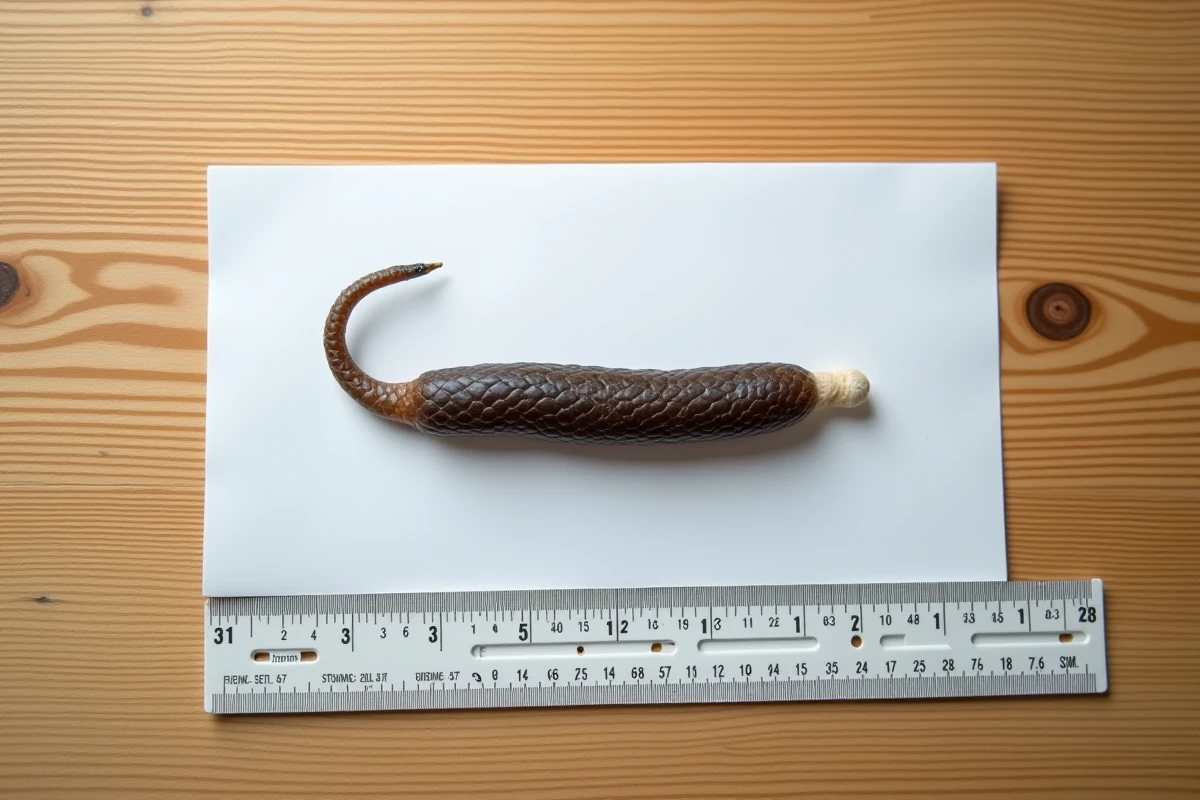
The most reliable criterion for recognizing a snake dropping remains the coexistence of a dark fecal mass and a white urate deposit in the same mass. When this dual aspect is absent, whether due to desiccation or specific humidity conditions, the location of the deposit and examination of food remains take over. Keeping gloves handy and photographing the find with an object for scale facilitates any subsequent identification.