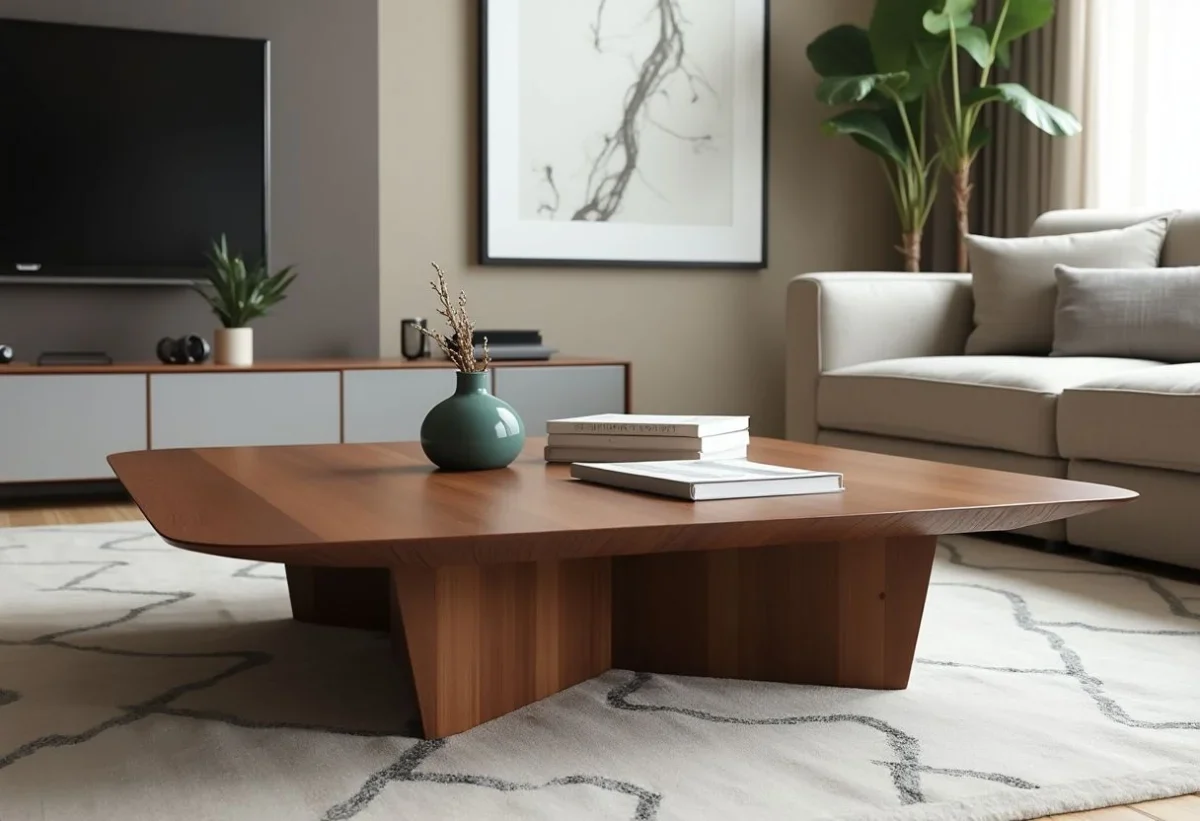
The central element of many living rooms, the coffee table intrigues with its versatility and aesthetics. It is not just a simple piece of furniture, as it embodies the personality of your interior while adding a touch of functionality. Whether you choose it in glass, solid wood, metal, or composite materials, the coffee table has become a symbol of style and comfort. Its role goes beyond being a support for the remote control or magazines. It serves as a meeting point for family and friends, a play surface for children, or even a dining tray for casual evenings. The various styles, shapes, and materials available allow it to adapt to all desires and needs.
Origins and evolution of the coffee table
To understand the importance of the coffee table, it is essential to return to its origins. This piece of furniture finds its roots in the salons of the 19th century, where it was primarily used to serve tea. Over time, the coffee table has evolved, adopting new shapes and functions.
- Initially, coffee tables were mainly used in British salons for tea service. Their height was adapted for sitting around, promoting conviviality.
- By the end of the 19th century, they began to democratize in Europe and America, becoming an essential piece of interior decoration.
- The design has evolved over the decades: from the heavy, ornate forms of the Victorian era to the sleek, modern lines of today.
- Today, they come in a multitude of styles, from the most classic to the most contemporary, sometimes incorporating high-tech features.
Materials and their advantages
The material chosen for your coffee table will largely determine its style and integration into your decor. Each material brings its own advantages and gives a unique character to your room.
- Wood: Warmth and authenticity characterize this choice. Whether it’s oak, pine, or teak, each type offers varied shades and textures that adapt to different decor styles.
- Glass: A choice leaning towards modernity and lightness. Glass is transparent, creating an impression of space and clarity, ideal for small areas.
- Metal: Robustness and modernity are the key words for metal. Often used in industrial interiors, it pairs perfectly with softer materials for a harmonious contrast.
- Composite materials: Flexibility and innovation characterize these materials. They allow for original designs and are often more affordable than solid wood or glass.
Functionality and design: finding the right balance
The design of your coffee table should not only be aesthetic. Its functionality is essential to meet your daily needs. Finding the perfect balance between these two aspects is the key to a harmonious living room.
The choice of shape – round, square, rectangular, or oval – influences the flow and available space in your living room. A square coffee table promotes an even distribution of space around it, while an elongated rectangular version may better fit narrow living rooms. Additionally, some coffee tables come with integrated storage, providing valuable space to store remotes, magazines, or other small items.
A well-chosen coffee table can also become a focal point in your living room. A model with bold lines or bright colors automatically draws the eye, transforming this utilitarian element into a true work of art.
Technology enthusiasts will find happiness with models equipped with modern features like built-in USB ports or height-adjustable tops for more ergonomic use. These innovations add an extra dimension to your furniture, combining practicality and design.